Living The Quran
From Issue: 869 [Read full issue]
Evil & Sin
Al-Baqara (The Cow) - Chapter 2: Verse 81
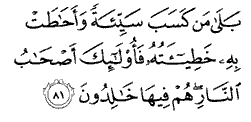 "Nay, whosoever earns evil and is surrounded by his
sins, it is they who are the inhabitants of the Fire,
therein to abide."
"Nay, whosoever earns evil and is surrounded by his
sins, it is they who are the inhabitants of the Fire,
therein to abide."
Evil here is most commonly understood by commentators to
mean "idolatry," the setting up of "partners" to God (or the setting up of
other things as equals to God) as objects of worship. To
be surrounded by his sins means to be a persistent sinner, to be one who
dies in sin before repenting of it, or to commit major sins as opposed to
minor ones and to die in that state unrepentant. The distinction
between major and minor sin (corresponding roughly, but not exactly, to
mortal sin and venial sin in the Christian tradition) is universal in Islam,
although historically there have been many different lists of major and
minor sins. Some are based on certain hadith of the Prophet listing
grave sins, while others identify major sins as those connected to hadd punishments (e.g., murder and adultery) in the Quran or those
speci?cally mentioned in connection with Hell or the curse of God. Major
and minor sins are not strictly divided: one can repent and be forgiven
for major sins, but even a minor sin can become major through obstinacy
and repetition.
Surrounded renders ahata, which can mean to "encircle," "enclose," or "comprehend." In a sense, one's sin overwhelms one's good actions, as one object encircles another, so that the decisive character of the soul is evil rather than good and the heart is what is encircled and overwhelmed. In a way, only idolatry deserves eternity in Hell, as it manifests a decisive orientation of the heart. When God says He forgives all sins except shirk, idolatry (4:48; 4:116), this means that He forgives gratuitously all sins other than shirk, not that shirk is unforgivable, since God forgives all sins (39:53).
The identi?cation of major sin and its consequences became entangled politically in early Islamic history, which is why many of the creeds of the classical period discuss the status of the Companions alongside questions of God's Attributes and Destiny. The internal con?icts of the early period made the Prophet's Companions subjects in the theology of sin and error, in light of the civil wars involving major Companions and even wives of the Prophet on opposing sides, culminating in the assassination of the two Caliphs Uthman and Ali by extremist elements who labeled them as grave sinners, hence, according to their belief, no longer believers and therefore illegitimate. The status of individual Companions (especially the early Caliphs) became a charged issue in intercommunity politics, in which sin became both a theological and political question pertaining to both religious and temporal authority.
Compiled From:
"The Study Quran: A New Translation and Commentary" - Seyyed Hossein Nasr